Ultraviolet: The Friendly Script Font for Creative Work
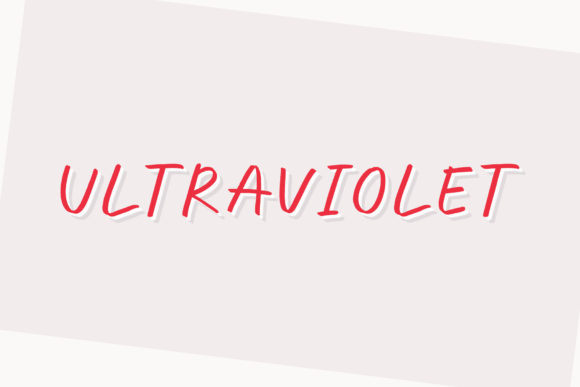
If you’ve ever spent too much time scrolling through endless font libraries, looking for something that feels both polished and approachable, you might appreciate what Ultraviolet offers. It’s a script font, meaning it mimics the fluid, connected strokes of handwriting. But unlike many ornate or delicate scripts, Ultraviolet is built on simplicity. Its lines are clean, its curves are smooth, and it carries a natural warmth that works in surprisingly broad situations. This isn't a font reserved for formal wedding invitations; it's a versatile tool designed for the everyday creator.
Why a Simple Script Font Matters to Different People
The value of a font like Ultraviolet isn’t universal. What makes it useful depends entirely on who you are, what you create, and what you're trying to communicate. For a small business owner running a cozy café, a handwritten-style font on a menu or social post can instantly convey personality and authenticity. For a blogger, it can serve as a perfect headline font for personal essays or lifestyle content, adding a touch of intimacy without sacrificing readability. Meanwhile, a marketing professional might see Ultraviolet as a strategic asset for branding projects that require a human, trustworthy tone, perhaps for a local service or a wellness brand.
This divergence in perspective is key. The same technical characteristic—a simple, legible script—becomes a different benefit depending on the user's primary goal. Is it about ease of use for a beginner? Is it about creative flexibility for a seasoned designer? Or is it about commercial value for an entrepreneur needing consistent, appealing visuals? Ultraviolet intersects these needs by being intentionally uncomplicated.
For Beginners and Hobbyists: Ease and Confidence
If you’re new to graphic design or just dabble in creative projects for fun, your priority is often straightforward: you want tools that don’t intimidate you. Complex fonts with excessive swashes or tricky spacing can derail a simple project. Ultraviolet, with its clear letterforms and consistent flow, is forgiving. You can type a phrase into a basic design app or social media template, apply Ultraviolet, and it will likely look cohesive and intentional without needing manual adjustments.
Consider a photography enthusiast wanting to add a subtle watermark to their prints, or someone crafting a digital greeting card for a friend. The learning value here is low; the font works immediately. This accessibility reduces friction and boosts confidence, allowing the user to focus on the message or image rather than on technical font details. It matches a goal of producing something pleasing quickly, without a deep investment in learning typography.
For Creators and Freelancers: Versatility in the Toolkit
For those who regularly produce content—bloggers, freelance designers, content creators—long-term usefulness and flexibility are paramount. You need assets that can serve multiple clients or projects over time. Ultraviolet fits into this category as a reliable, neutral script. It’s not so stylized that it becomes a one-trick pony; it can adapt.
A blogger might use it for featured image titles across various posts, creating a recognizable yet friendly visual signature. A freelance designer could pair it with a strong sans-serif for a client’s poster, where the script adds a human touch to factual information. The priority here is having a font that won’t clash or feel overused across diverse applications. Its simplicity prevents it from dominating a design, allowing it to complement other elements. This makes Ultraviolet a practical, rather than a spectacular, choice in a professional toolkit.
Professional and Business Applications: Presentation and Tone
When the output is tied directly to business goals—like branding, marketing materials, or product packaging—the evaluation of a font shifts towards presentation and perceived quality. An educator designing course materials might use Ultraviolet for section headers to make dense information feel more engaging and approachable. A small business owner, say of a handmade crafts store, could employ it on labels and social media posts to reinforce the artisan, personal nature of their products.
In these contexts, Ultraviolet’s reliability is an asset. It renders cleanly across print and digital mediums, and its legibility ensures the message isn’t lost. For a marketer, the font aids in crafting a specific tone. Compared to a rigid geometric font, Ultraviolet suggests warmth and authenticity; compared to a highly decorative script, it maintains professionalism. This balance is crucial for commercial use where you need to attract attention without seeming unserious.
Identifying if Ultraviolet Matches Your Project
How do you decide if this font is right for your current need? Start by asking a few simple questions about your project. Is the primary goal to add a personal, handwritten feel without actual handwriting? Does the design require a font that is easy to read at medium sizes, say on a poster or a social media graphic? Are you looking for something that won’t require extensive tweaking or expert knowledge to look good?
If your answers lean towards yes, then Ultraviolet is a strong candidate. Conversely, if your project demands extreme formal elegance, or perhaps a very modern, technical aesthetic, then other fonts might be more suitable. Likewise, if you are working on lengthy body text, a script font is generally not appropriate—Ultraviolet’s role is typically in headlines, short phrases, and decorative accents.
Practical examples illustrate this. A consumer making a family photo album cover might use Ultraviolet for the title. An entrepreneur launching a podcast could use it for episode cover art to create a consistent, inviting brand touch. A professional creating a presentation for a creative agency might use it sparingly on title slides to set a collaborative, ideation-friendly mood. In each case, the font serves a specific function aligned with the user’s identity and objective.
The Underlying Principle: Designed for Use, Not Just Display
Ultimately, the appeal of Ultraviolet rests on a design philosophy that prioritizes use over ornamentation. Many script fonts are created as showpieces, beautiful but context-limited. Ultraviolet seems crafted for application. This makes it a particularly helpful resource for individuals who aren’t typographers but who understand that typography is a vital part of communication.
Whether you’re a hobbyist wanting to improve your personal projects, a professional needing a dependable secondary font, or a business owner seeking to humanize your brand visuals, the simplicity of Ultraviolet offers a clear path. It removes a layer of complexity from the creative process, allowing you to convey warmth and personality with a straightforward, effective tool. In a digital environment often filled with overly complex options, having something that is genuinely simple and broadly suitable is a significant advantage.