The Distinctive Character of Handwritten Script Fonts: Exploring Yunita
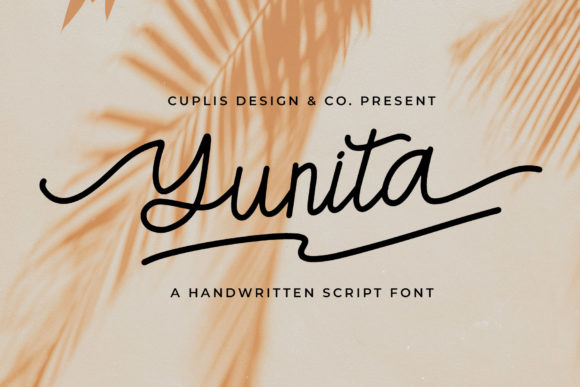
In the diverse landscape of digital typography, handwritten script fonts occupy a unique and emotive space. They bridge the gap between impersonal digital communication and the warmth of personal touch. Among these fonts, styles like Yunita offer a specific blend of elegance and accessibility that has broad relevance for various creative and professional projects.
Understanding the Core Appeal of Elegant Script Typography
The fundamental appeal of a handwritten script font lies in its ability to convey personality. Unlike standardized serif or sans-serif typefaces, a script like Yunita introduces an element of human craftsmanship into digital designs. This characteristic is not merely aesthetic; it carries psychological weight. Viewers often associate such fonts with care, attention, and a degree of luxury or personalization, making them powerful tools for establishing tone.
Elegant script fonts typically feature flowing baselines, varied stroke weights, and often, decorative flourishes. The goal is to mimic the natural irregularities and grace of skilled penmanship without sacrificing digital usability. This balance between organic beauty and functional reliability is a key challenge in font design, and a well-crafted font achieves it seamlessly.
Key Technical Features: The Importance of PUA Encoding
A practical aspect that significantly enhances the usability of advanced fonts like Yunita is PUA encoding. The Private Use Area is a designated section within a font file that allows designers to place extra characters, glyphs, and alternates without conflicting with standard Unicode assignments. For a user, this means that all the special swashes, alternate letterforms, and ligatures are built into the font and are accessible through most design software without needing complex coding or separate files.
This technical consideration is crucial for professionals who require efficiency. Instead of manually creating or searching for decorative elements, they can access a full set of typographic tools directly from their font menu. This makes implementing a cohesive, sophisticated look across a project—be it a wedding invitation suite or a brand logo—far more streamlined and consistent.
Primary Applications and Real-World Use Cases
The versatility of an elegant handwritten script font extends across both commercial and personal spheres. Its applications are defined by contexts where emotion, prestige, or artistic flair are paramount.
In branding and identity design, a font such as Yunita can serve as the cornerstone for logos, particularly for businesses in beauty, fashion, hospitality, or craft industries. The font’s character can imbue a label or logo with a sense of artistry and bespoke quality. It’s important, however, to consider legibility at smaller sizes and for secondary text; script fonts often play a primary, headline role rather than being used for lengthy body copy.
The world of personal events relies heavily on this typographic style. Wedding invitations, anniversary announcements, and ceremonial programs frequently utilize elegant scripts to set a formal and romantic tone. The availability of swashes through PUA encoding allows designers to customize initials, names, and dates with unique flourishes, making each piece feel singular and tailored.
Creative hobbies and digital content creation also find great value in these fonts. Blog titles, quote graphics for social media, and album cover art benefit from the immediate visual interest a script font provides. For a hobbyist creating custom apparel or home decor, using a font like Yunita transforms a simple text phrase into a distinctive design element.
Considerations for Professional Implementation
While the advantages are clear, successful use of a handwritten script font requires mindful application. Legibility is the foremost concern. Overly elaborate swashes or very thin stroke weights can become difficult to read, especially on digital screens or when printed small. Testing the font across various mediums and sizes is a essential step.
Another consideration is contextual appropriateness. The elegant and often feminine connotation of a font like Yunita may not suit a brand aiming for a rugged, tech-forward, or minimalist image. Understanding the subconscious message conveyed by typography is part of expert design practice.
Finally, technical compatibility should be verified. While PUA encoding solves many access issues, ensuring the font renders correctly across different operating systems, software versions, and web browsers is necessary for professional projects, particularly those destined for public digital consumption.
The Broader Impact on Design Workflows and Trends
Integrating a specialized font into a design workflow changes the creative process. It encourages a more decorative approach from the outset. Designers might begin by exploring the font’s full glyph set to find unique combinations and stylistic alternates that define the project’s visual language. This exploration phase, enabled by easily accessible PUA characters, can lead to more original and customized outcomes than relying on standard fonts.
Trends in digital design often see a pendulum swing between stark minimalism and expressive ornamentation. Currently, there is a growing appreciation for personalized, human-centric design that stands out in an increasingly automated world. Handwritten script fonts align perfectly with this trend, offering a digital tool that rejects uniformity and injects individual character. This makes them relevant not just for traditional applications like invitations, but for modern web design elements, app interface headlines, and digital marketing campaigns seeking to convey authenticity.
For educators and researchers in fields like graphic design or visual communication, fonts like Yunita serve as excellent case studies. They illustrate the intersection of aesthetic tradition—the art of calligraphy—with modern digital technology, such as PUA encoding and vector-based font creation. Analyzing their use reveals how typography influences perception and communicates beyond literal meaning.
Selecting and Utilizing a Font for Long-Term Projects
When a business owner or creator decides to adopt a specific handwritten script font for a core project, such as a brand identity, thinking long-term is vital. Questions of scalability arise: will the font maintain its elegance and legibility if the business expands and the logo appears on diverse materials from storefronts to mobile apps? Does the font family offer necessary variations, like a simpler alternate or a complementary sans-serif for supporting text, to build a versatile typographic system?
Practical understanding also involves mastering the software tools to use the font effectively. Learning how to access the glyph panel or character map in applications like Adobe Creative Suite, Affinity Designer, or even word processing software unlocks the full potential of the font’s PUA encoded features. This knowledge turns a beautiful asset into a powerful and practical instrument.
The real-world relevance of a font extends to its licensing and distribution. Professionals must ensure their use complies with the font’s license, especially for commercial projects or products like clothing where the font becomes integral to a sold item. Understanding these legal considerations is part of responsible and expert implementation.
In conclusion, the role of a handwritten script font like Yunita in contemporary design is multifaceted. It serves as a bridge between human emotion and digital precision, a tool enabled by practical features like PUA encoding, and a stylistic choice with profound impact on perception. Its use cases span from deeply personal celebrations to strategic commercial branding, demanding from its users both creative inspiration and technical consideration. By appreciating its characteristics, advantages, and appropriate applications, a broad spectrum of users—from hobbyists to seasoned professionals—can harness its power to add a touch of elegant, personalized craftsmanship to their work.