Just Sorry: The Beautiful Calligraphic Script Font for Authentic Design
In the world of digital design, finding a font that conveys genuine elegance and personal touch can be a significant challenge. Many script fonts feel sterile or overly digital, lacking the warmth and character needed for projects that require a sense of authenticity and artistry. Whether you are a wedding planner crafting invitations, a small business owner designing branded stationery, or a creative looking to elevate your social media presence, the need for a versatile, beautiful, and easy-to-use script font is a common goal. This is where Just Sorry excels.
Understanding the Just Sorry Font
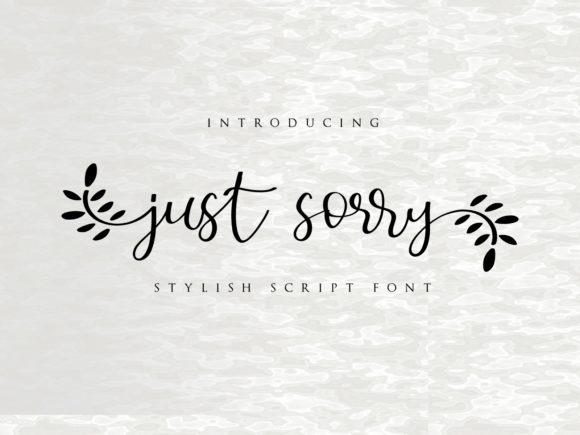
Just Sorry is not just another script typeface; it is a meticulously crafted calligraphic script font designed to replicate the beauty of hand-penned lettering. Its core characteristics include a gracefully varying baseline and smooth, flowing lines that mimic natural handwriting. The font boasts a full set of gorgeous glyphs and stunning alternates, allowing for extensive customization and a unique look in every project. Perhaps most importantly, Just Sorry carries an authentic feel, a quality often missing in digital fonts, which makes it ideal for projects where emotion and personal connection are paramount.
For designers and creators, a frequent obstacle is accessing the full potential of a decorative font. Many beautiful fonts lock their special characters and swashes behind complicated workflows or require additional software. Just Sorry addresses this directly through its PUA (Private Use Area) encoding. This technical feature means that every glyph and swash is readily accessible within standard design programs like Adobe Illustrator, Photoshop, or Canva. You can effortlessly implement the full decorative range without specialized knowledge, making sophisticated design achievable for professionals and hobbyists alike.
How Just Sorry Addresses Common Creative Needs
The applications for Just Sorry are vast, centered around scenarios where beauty and communication intersect. Let’s explore how it helps solve specific design challenges.
Creating Unforgettable Wedding Invitations and Stationery
The goal for wedding stationery is to set the tone for the entire event—to convey love, celebration, and personal style. A generic font can undermine this effort. Just Sorry, with its authentic calligraphic feel, becomes a powerful tool here. Its smooth lines and gorgeous glyphs allow you to design invitations, place cards, and programs that feel bespoke and hand-crafted. Using the stunning alternates, you can ensure names and key words are uniquely styled, adding a layer of personalized detail that guests will notice and appreciate. The outcome is a cohesive, elegant stationery suite that enhances the wedding experience from the first touch.
Elevating Brand Identity with Beautiful Stationery Art
For businesses, especially in niches like boutique retail, wellness, or creative services, physical stationery—business cards, thank-you notes, letterheads—is a tangible touchpoint. The need is to communicate professionalism infused with artistry and approachability. A clean, minimalist font might communicate efficiency but not warmth. Just Sorry can be applied selectively to logos, headings, or quotes on these materials to introduce a human, crafted element. This helps a brand stand out, suggesting care and attention to detail. The varying baseline ensures the text feels dynamic and interesting, not flat or robotic, directly supporting a brand identity that values beauty and connection.
Designing Eye-Catching Social Media Posts and Graphics
In the fast-scrolling environment of social media, the challenge is to capture attention and communicate quickly, often through quote graphics, promotional announcements, or celebratory posts. Visual clutter is a common pitfall. Just Sorry offers a solution. Its inherent beauty makes it perfect for overlaying on images or as the centerpiece of a simple graphic. A quote rendered in Just Sorry feels more profound and shareable. An announcement for a launch or event feels more special and inviting. By leveraging the swashes and alternates accessible via PUA encoding, you can create variations that keep your visual content fresh and engaging without needing to find a new font each time.
Crafting Cute and Heartfelt Greeting Cards
Whether for birthdays, holidays, or simple notes, the goal of a greeting card is to express a personal sentiment. Digital templates often feel impersonal. Just Sorry empowers you to create cards that look like you penned them yourself. The authentic feel of the font translates directly into the recipient’s perception. Using it for the main message, while perhaps combining it with a simpler font for longer body text, creates a balanced, heartfelt design. The outcome is a card that feels genuinely thoughtful, strengthening personal connections in a tangible way.
Practical Implementation and Recommendations
To effectively implement Just Sorry, consider your project’s hierarchy. This font is best used for headlines, names, short quotes, or decorative elements—not for long paragraphs of body text, as its decorative nature can hinder readability at length. Pair it with a simple, complementary serif or sans-serif font for balance.
Explore the alternates. The PUA encoding means you can easily access different character styles in software that supports glyph panels. Experiment with swapping key letters in a name or title to find the most pleasing combination. This small effort significantly increases the custom, hand-made quality of your work.
Consider the emotional tone. Just Sorry is inherently elegant and warm. It is perfectly suited for romantic, celebratory, artistic, or personal projects. It might be less suitable for highly technical, corporate, or starkly minimalist contexts unless used very sparingly as an accent.
Tailoring Use to Different User Approaches
The way you use Just Sorry may differ based on your expertise and goals.
For the Professional Designer, Just Sorry is a reliable asset in your toolkit for specific client projects. You can leverage its PUA encoding to quickly deliver high-end, customized typography without manual illustration, increasing efficiency while maintaining a high-quality, authentic result. It solves the client’s desire for “something that looks hand-drawn” with a scalable, editable digital solution.
For the Small Business Owner or Entrepreneur, this font bridges the gap between DIY and professional design. Using it in template-based design platforms, you can create marketing materials and stationery that elevate your brand beyond standard templates. The focus is on outcome: materials that build brand prestige and customer perception without requiring a large design budget.
For the Creative Hobbyist or Social Media Content Creator, Just Sorry makes advanced typography accessible. The challenge of making beautiful graphics is solved by having a font that is inherently beautiful and easy to use in full. The outcome is more engaging, aesthetically pleasing content that resonates with your audience and reflects your personal style.
In all cases, Just Sorry serves as a bridge between the digital and the handmade. It addresses the widespread need for authenticity in design by providing a tool that is both beautiful and practically implemented. By focusing on the projects where emotion and aesthetics are key—weddings, branding, social media, and personal greetings—you can harness this calligraphic script font to create work that not only looks gorgeous but feels genuinely connected and purposeful.