Hi Mellati: A Script Font for Romantic Branding
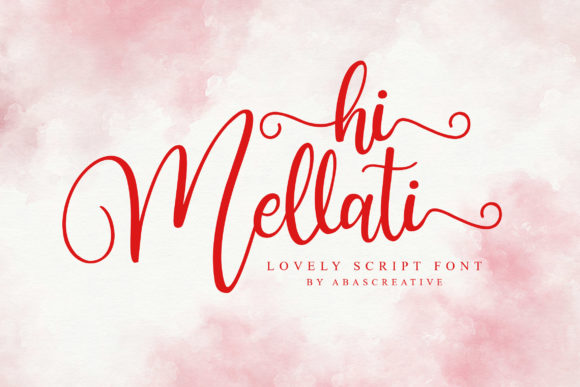
In the realm of typography for personal and commercial projects, finding a font that balances distinct elegance with straightforward usability is a common challenge. Hi Mellati presents itself as a potential solution for specific aesthetic needs. This script typeface is designed with a flowing, calligraphic style that leans toward the romantic and decorative.
What makes Hi Mellati worth a closer look is its combination of a traditionally beautiful form with a technical feature aimed at easing implementation. It is PUA encoded, which stands for Private Use Area. This encoding means every glyph, including alternative character shapes and ornamental swashes, is assigned a specific code within the font file itself. For users working in software like Adobe Illustrator, Photoshop, or even certain word processors, this allows access to the full character set through a standard glyph panel or character map, without requiring specialized font management tools or complicated manual substitutions.
Evaluating the Font's Key Characteristics
The core design of Hi Mellati is soft and connected. Its lowercase letters feature generous curves and a moderate baseline rhythm that avoids extreme wobbling, lending it a sense of controlled grace. The uppercase letters are more pronounced and decorative, often serving as natural entry points for swash elements. This creates a hierarchy within the script, making it suitable for titling or emphasizing key words, such as a couple's names on an invitation.
The font's primary purpose is clear: it is tailored for applications where a sense of affection, celebration, or refined personal touch is paramount. Its strengths lie in its decorative capacity and its PUA encoding, which unlocks that decorative potential for a wider range of users.
Practical Performance in Design Projects
Considering real-world use, Hi Mellati performs reliably within its intended domain. For digital or printed wedding invitations, ceremony programs, or anniversary announcements, it provides a ready-made aesthetic that can elevate the presentation. Its consistency across characters ensures a cohesive look when setting short blocks of text, like dates, venues, or poetic verses.
In branding, its application is more niche. It could be effective for businesses whose identity is deeply tied to concepts of love, care, beauty, or artisanship—think a boutique florist, a wedding planner, a specialty chocolatier, or a handmade jewelry line. Here, Hi Mellati might be used selectively for logos, packaging tags, or marketing headers, paired with a simpler, more neutral typeface for body text. Its effectiveness diminishes in longer textual content due to its stylistic complexity, which can hinder readability.
Usability and Implementation Considerations
The PUA encoding is a significant usability feature. It translates to flexibility for the designer. Instead of receiving a basic font file with only standard letters and a separate, difficult-to-use file for extras, the alternates and swashes are integrated. This means a designer can scroll through the glyph panel in their design software and click to insert an alternative 'a' with a longer tail or a capital 'L' with an elaborate flourish, directly into their text box. This workflow is more intuitive and less error-prone than older methods for accessing decorative glyphs.
Long-term value is tied to project archiving and editing. Since the special characters are part of the core font, a file created today using a specific swash will retain that character if opened years later, provided the Hi Mellati font is installed on the system. This offers reliability for projects that may need future updates.
Who Stands to Benefit Most from This Font?
The audience for Hi Mellati aligns with creators who undertake projects with a romantic or personal thematic core. Freelance designers specializing in wedding media, small business owners in the bridal or gifting sectors, and bloggers focusing on lifestyle or romance content may find it a practical asset. It is also approachable for serious hobbyists or educators creating personal projects, such as family history books or celebratory posters, who want a polished look without mastering calligraphy.
Its limitations are important to note. Hi Mellati is not a general-purpose font. It would be unsuitable for corporate reports, lengthy website articles, or any context requiring high-speed readability. Its presentation is inherently ornate, which can clash with minimalist or modern design schemes. Furthermore, while PUA encoding improves access, it still requires the user to know how to open and use the glyph panel in their specific software, a step beyond basic font selection.
Final Observations on Fit and Function
Evaluating whether Hi Mellati fits your needs depends on matching its characteristics to your project's goals and your own workflow. If your primary projects involve short, impactful text for events, branding, or digital graphics centered on romance and beauty, and you regularly use design software with a glyph panel functionality, then Hi Mellati offers a tangible, useful tool. It removes a layer of friction in accessing decorative typography.
If your work is varied or demands primarily utilitarian typography, or if you operate strictly in environments without easy glyph access (like some online design platforms), its value decreases. In those cases, a simpler script or a different stylistic approach might yield more flexibility.
Ultimately, Hi Mellati is a specialized instrument. Its worth is not in being a universal font but in serving its specific purpose with a degree of practical consideration, through its PUA encoding, for the user who needs exactly what it provides: a lovely script for moments that call for elegance and affection.